

Couriers and Parcel Fleets
Discover how Drive Commander helps delivery operators prevent low speed accidents, protect drivers’ licences, reduce insurance costs, and maintain safer, more focused workflows during high pressure last mile operations.
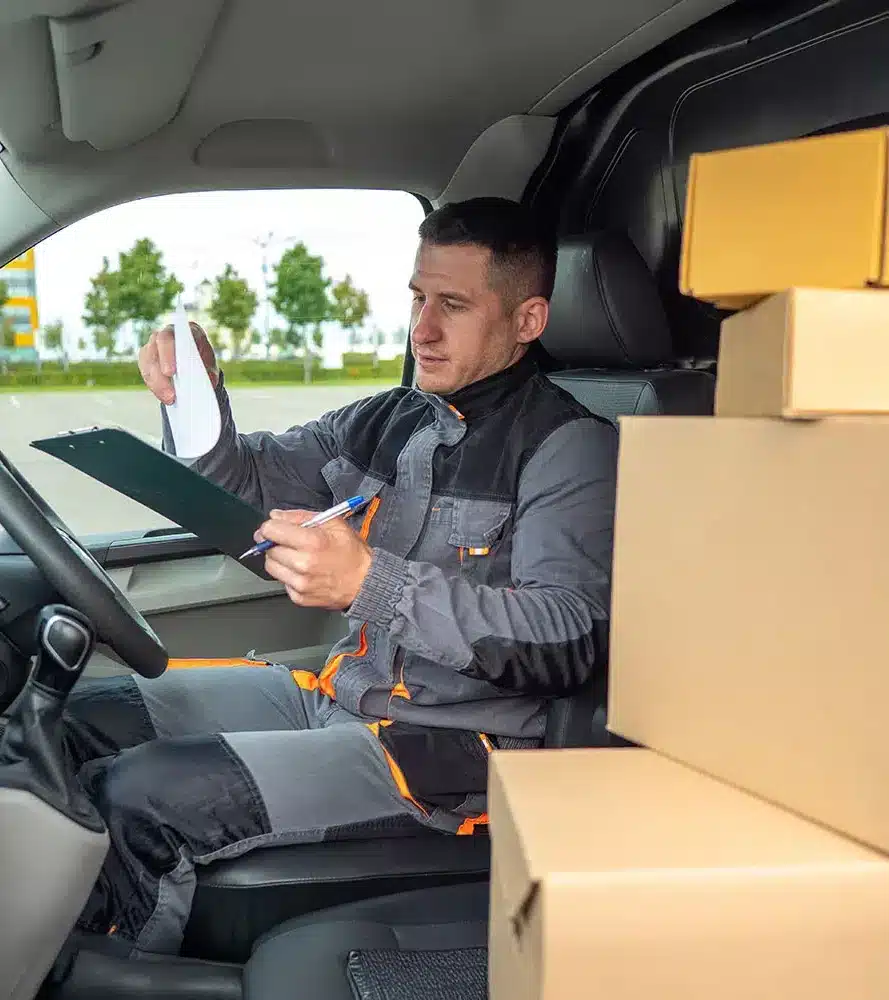
The Last Mile, The Last Look
Why the Delivery Industry Needs Drive Commander to Survive the "Drop"
In the parcel and courier industry, time is the only currency that matters. The pressure of "the drop"-hitting 80 to 100 deliveries a day-creates a working environment unlike any other. The cab of a delivery van is a high-stress command centre where the driver is battling traffic, navigating residential mazes, and constantly checking the following address. This pressure creates a lethal habit: The "Rolling Check."
This is the moment a driver picks up their phone to check the following postcode or scan a barcode while still rolling at 10mph towards the curb. It seems harmless, but it is a primary cause of low-speed accidents, insurance claims, and tragically, driveway incidents involving children and pets.
For fleet managers and owner-operators in the delivery sector, Drive Commander is the tool that breaks this cycle. Here is why it is essential for your vans.

Solving the "Multi-App" Chaos
Modern delivery drivers are not just driving; they are managing a digital workflow. They are juggling a routing app (like Waze), a manifest app (like Amazon Flex or DPD), and often a music app.
- The Problem: Constant app switching creates a "visual tunnel," where the driver spends more time looking at the screen than at the road.
- The Drive Commander Solution: The app locks the screen the moment the wheels turn. It forces a clean break: you drive to the stop, park, then check the device. It imposes a safety discipline that even the most conscientious driver struggles to maintain under pressure.

Preventing the "Driveway Tragedy"
The nightmare scenario for any courier is a collision in a residential zone. Delivery vans operate in areas where children play and pedestrians walk.
- The Risk: A driver checking a "Safe Place" note on their phone while manoeuvring into a cul-de-sac is blind to the child on a scooter or the dog running into the road.
- The Safeguard: Drive Commander ensures that when the vehicle is moving, even at low crawling speeds, the driver's eyes are up and scanning for hazards, not down at a screen reading instructions.

Fighting the "Hire and Reward" Insurance Spike.
Courier insurance (Hire and Reward) is punishingly expensive. Insurers punish this sector because they know the accident rate is high.
The Leverage: You can use Drive Commander to fight back against these premiums. By presenting data to your broker showing that your fleet is technologically unable to use phones while moving, you differentiate yourself from the "high-risk" pool. You are proving that you have removed the single most significant variable in courier accidents.
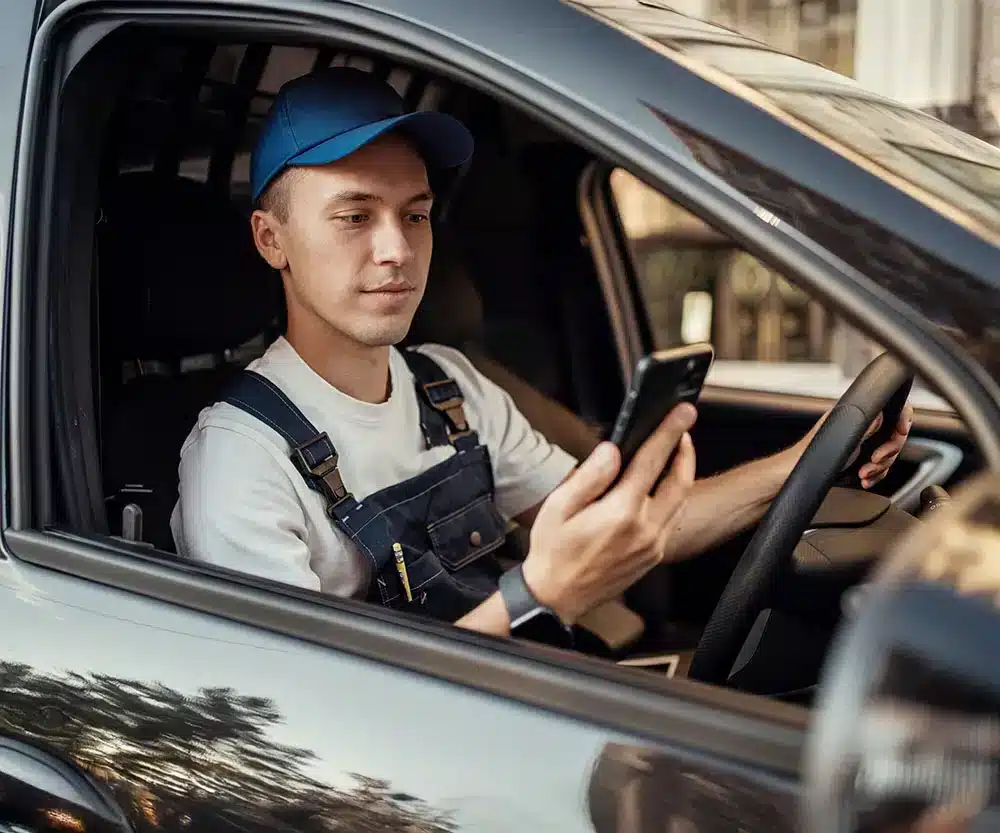
Protecting the Self-Employed Driver
Many couriers are self-employed owner-drivers. If they lose their van to an accident or their license due to points, they lose their income instantly.
License Protection: In the UK, 6 points for mobile phone use is a disaster. For a new driver (under 2 years), it means instant revocation. For an experienced driver, it puts them one mistake away from a ban. Drive Commander is "income protection" insurance-it stops the momentary lapse in judgment that kills a career.
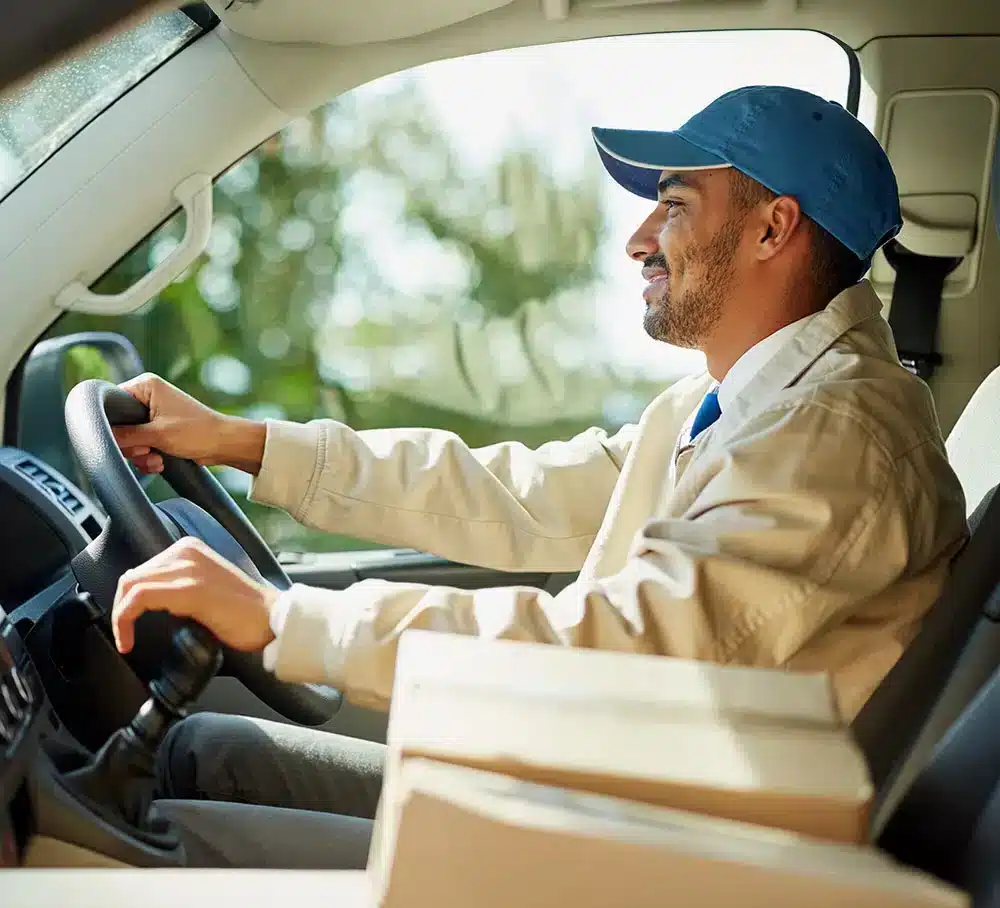
Efficiency Through Focus
It sounds counterintuitive, but locking the phone can actually improve delivery times.
The Logic: Distracted drivers miss turns. They hesitate at junctions. They drive slower and more erratically. A focused driver, who checks the route before moving and then drives with intent, is smoother, faster, and misses fewer turns. Drive Commander enforces the "Check, Drive, Park" rhythm that professional advanced drivers use.
In the delivery game, the phone is your lifeline but also your most significant liability. Drive Commander lets you maintain the efficiency of the app-based workflow without paying the price in bent metal and lost licenses. It ensures that the "Last Mile" is not the most dangerous.
-

Safe Mode
Puts the device in Safe Mode when driving. Silences alerts and notifications, locks keyboard and screen, blocks access to text, email, browser, and apps.
-

Application Whitelisting
Administrators can permit the use of specific apps, such as Navigation, whilst in Safe Mode.
-

Automatic Start/Stop
Phone is automatically locked/unlocked when vehicle movement is detected (by vehicle telematics or GPS, depending on the option implemented).
-

Usage Reporting
View and report on all infractions and overrides per driver.
-

Easy Installation
Simple install and update over-the-air or via a mobile device management platform.
-

Handsfree
Handsfree device usage control. Handsfree usage of the device can be permitted or denied by policy.
-

Passenger Override
The passenger button allows you to certify that you are not driving and gain full access to your device. Configurable by policy.
-

Emergency Calls
Emergency calls are always allowed. Outbound plus inbound callback.
-

Industry-Leading Battery Life
Latest power saving innovations mean you'll always be connected.
-

End-Of-Drive
Quickly regain access to all phone features at the end of your drive.



